


There comes a moment in working life when tiredness stops feeling temporary. The weekend isn’t enough to recover. Tasks you once approached with interest become a burden. Patience runs shorter, concentration gets harder and the thought “I have nothing left to give” appears more and more often.
This doesn’t mean every difficult period leads to burnout. It does mean that persistent exhaustion shouldn’t be treated as proof of commitment or professionalism.
The real question isn’t only “how can I hold out longer?”. It is also “what needs to change so that I don’t have to hold out this hard all the time?”.
What burnout is — and what it isn’t
The World Health Organization describes burnout as a phenomenon resulting from chronic workplace stress that has not been successfully managed. It does not classify it as a medical condition in its own right, and it links it specifically to the work context.
It describes it through three dimensions:
- Exhaustion: a feeling that your physical and mental reserves have run low.
- Distance from your work: negativity, cynicism or detachment from what you do.
- Reduced professional efficacy: a feeling that you can’t achieve what you used to, or that your effort isn’t paying off.
A tough week or a period of heavy workload doesn’t automatically mean burnout. Likewise, symptoms such as severe tiredness and difficulty concentrating can have other causes. That’s why, when they persist or affect your daily life, they need to be assessed by a health professional.
The signs worth noticing
Some changes are easy to put down to a busy period. But if they keep coming back, it is worth stopping to notice them:
- In your body: persistent tiredness, trouble sleeping or aches that appear more often.
- In your thinking: difficulty concentrating, putting off decisions you used to make easily, a constant sense of overload.
- In your relationship with work: withdrawal, cynicism, less interest or doubts about your own effectiveness.
You don’t need to wait for all of them to appear. And you don’t need to decide on your own whether “it’s really burnout” in order to take what you’re going through seriously.
The three energy zones from “Kan’ to”
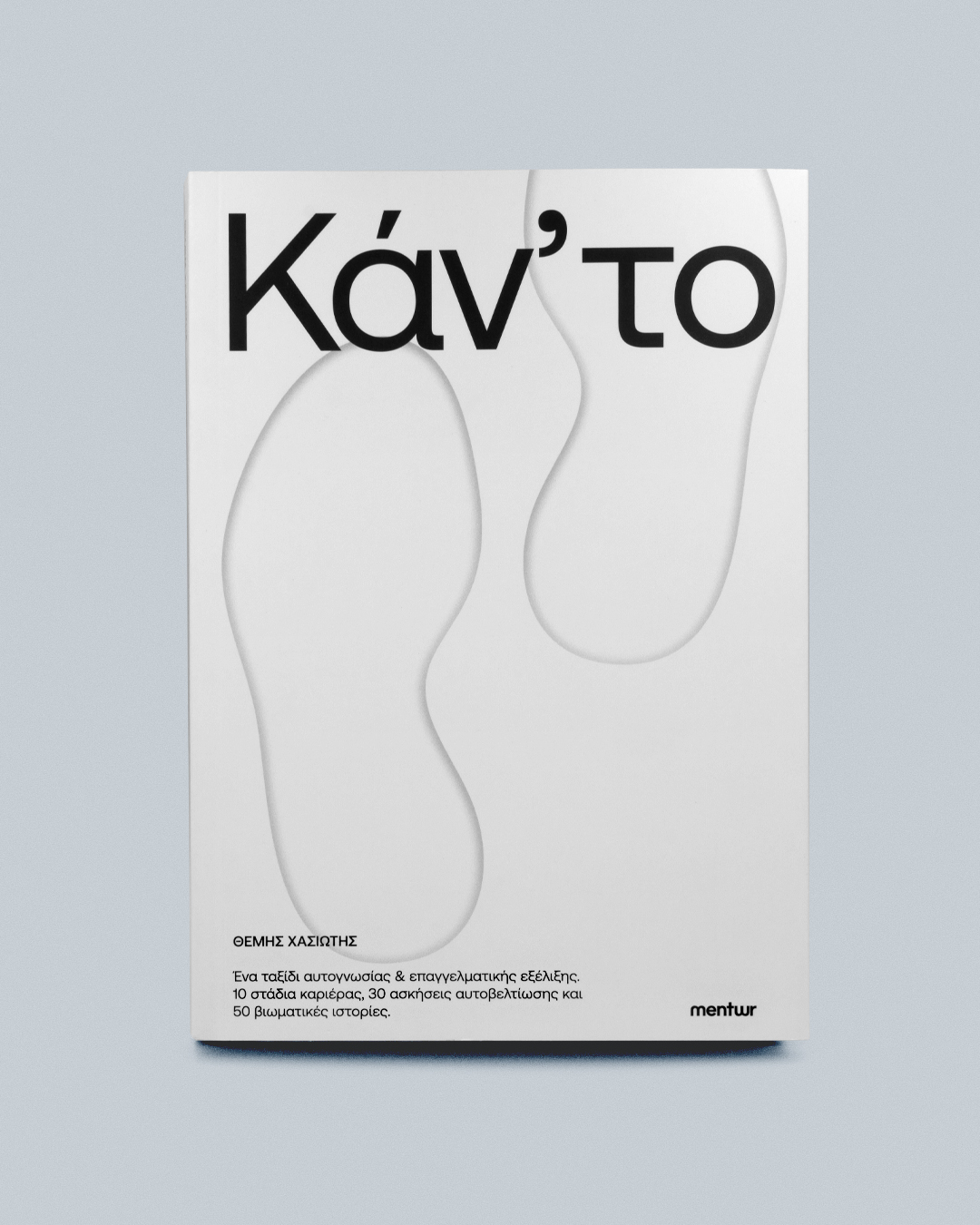
In the book “Kan’ to” I look at our personal energy through three pillars: Body, Mind and Spirit. The Body is about our physical stamina, the Mind about clarity of thought and the Spirit about our connection with what holds value and meaning for us.
Based on these pillars, I describe three zones:
- Performance: we have the energy and focus to meet demands and to create.
- Renewal: we recognise that our reserves are running down and we need time and conditions to recharge.
- Exhaustion: we feel that demands exceed the strength we have available, on more than one level.
Personal energy model from the book “Kan’ to”, Stage of Responsibility.
These zones are a practical framework for self-observation, not a diagnostic tool for burnout. Their value lies in not treating exhaustion as the only moment when we are allowed to stop.
The aim isn’t to be at peak performance all the time. It is to notice when we need to recover our strength, and to be able to respond to that need.
A self-observation exercise: Body, Mind, Spirit
Take a sheet of paper and answer three questions honestly:
Body: How rested have I felt lately? What has changed in my sleep, my tiredness or my physical stamina?
Mind: How easily do I concentrate, think clearly and make decisions?
Spirit: How connected do I feel with my values, my people and the meaning of what I do?
You don’t need to give yourself a score or draw conclusions about your health. Look at where changes have appeared and which situations make them worse. The full self-assessment exercise, with the Body – Mind – Spirit journal, is included in the book.
What you can change from tomorrow
It isn’t realistic to believe that four small moves will solve a complex problem. They can, however, be a starting point for real change.
1. Set a boundary you can keep
Choose one point where work systematically spills into your personal time. It could be late-night emails, endless meetings, or taking on tasks without checking whether there is time for them.
Start with one specific boundary, adapted to the demands of your role, and communicate it where needed.
2. Protect a little time to recover your energy
A short break, a meal away from a screen or a walk won’t solve burnout on their own. But they are small chances to interrupt the constant strain.
Rest isn’t a reward you earn only once everything is done. It is a need that exists even while tasks are still open.
3. Talk about the real cause of the pressure
If the workload is consistently bigger than the time and resources available, personal boundaries aren’t enough. Priorities, deadlines, staffing, the division of responsibilities and ways of working all need to be discussed.
Instead of just saying “I can’t keep up”, try making it specific:
“With the current priorities I can complete A and B. For C to move forward as well, a deadline needs to change or extra support needs to be provided.”
4. Ask for support early
Talk to someone you trust. If exhaustion, changes in mood or sleep problems persist, see a doctor or a mental health professional. You don’t need to wait until you reach your limits.
Burnout is not only an individual responsibility
There is something often missing from conversations about burnout: we can’t ask people to look after themselves without looking at the conditions in which they work.
Overload, lack of autonomy, unclear responsibilities and insufficient support are risks to mental health at work. World Health Organization guidance also places emphasis on action at the level of the organisation, not only on individual stress management.
So for a team leader, the question isn’t only “how do I help my people cope?”. It is also:
- Have we agreed what really matters?
- Is the workload compatible with the time and people we have?
- Can someone talk about their difficulties without fearing they will be seen as inadequate?
Caring for people isn’t just a good intention. It needs to show up in management’s everyday decisions.
“Refuges of the soul”: where do you go back to find your balance?
In “Kan’ to” I write about my village, Milia in Metsovo, high in the Pindus mountains. It is a place I return to when I need to step away from the strain of daily life and reconnect with what matters to me.
I call it one of my “refuges of the soul”.
“Because a truly successful professional is not only the one who reaches the top, but the one who knows where to return to find balance again, and the strength to carry on.”
From “Kan’ to”, chapter “The Search for Serenity”
A refuge like this can be a place, a person, an activity or a small daily habit. It doesn’t replace the changes that may be needed at work, or support from a specialist. But it can be an important personal anchor.
Ask yourself: Where do I go back to when I’m under pressure? And when did I last give myself the time to be there?
An everyday example
Let’s say Dimitra runs an accounts department that has been working for months under heavy demands, with two vacant positions.
At first she stays a little longer at the office. Then she starts answering messages every evening. Gradually she cuts back her time to rest and finds it hard to concentrate even on routine tasks.
The answer isn’t simply to organise her calendar better. She needs to discuss the workload and the resources available with management, review priorities and deadlines, and seek professional help if the symptoms persist.
At the same time she can protect some personal habits of rest. But real change also means dealing with what creates the constant pressure.
Frequently asked questions
What is the difference between everyday stress and burnout?
Stress can appear in many situations in life and is not the same as burnout. Burnout relates specifically to the work context and is linked to prolonged exhaustion, detachment or cynicism, and reduced professional efficacy. You can’t tell for certain what is happening from an article or a list of symptoms alone.
Can a holiday solve the problem?
Time away from work can offer much-needed rest. But if you go back to the same conditions of overload, more fundamental changes may be needed in the way you work and in the support available.
What do I do if I see signs of exhaustion in someone on my team?
Talk to them privately, respectfully and without trying to give them a diagnosis. Ask how they are experiencing their workload and what could change. Look at concrete solutions in how the work is organised, and let them know about the support options available, while respecting their privacy.
Self-care starts before exhaustion
At Mentwr we believe self-care needs a place in everyday life, not only in the moments when we feel we have reached our limits.
The 90-Day Self-Care Pad is a practical tool for organising and tracking small acts of care over time. The Ritual of Release is linked to the philosophy of personal rituals for unwinding.
These tools are not a treatment or a solution for burnout. They can support everyday habits of care, alongside the necessary changes in working conditions and, where needed, professional support.
Real progress isn’t measured only by what you achieve. It is also measured by whether you can keep going without losing yourself along the way.
This article is for information only and is not a medical or psychological assessment. If you are experiencing persistent exhaustion, changes in mood, sleep problems or other symptoms that affect your life, please speak to a health professional.
Themis Chasiotis is the founder of Mentwr, author of the book “Kan’ to” and a strategy consultant to businesses and organisations. He has 25 years of professional experience in Greece and abroad, including senior executive roles. Through Mentwr he creates practical tools and learning experiences that turn personal and professional development into everyday practice.



 Your cart is empty.